

)
From Blank Page to 5G Pioneer
Private 5G has moved from buzzword to backbone. In heavy industry, especially at sprawling chemical sites, it is becoming a strategic platform for safety, mobility, automation and real-time insight. This article recounts how a greenfield private 5G network was designed and delivered for one of Europe’s largest integrated chemical campuses, and what that journey reveals about the future with edge computing and 6G. The client, located near a major Western European port and hosting more than 50 production units and partner operations, is anonymized here to respect confidentiality.
Beyond the story, the piece grounds key decisions in open standards and reputable sources, and closes with how Pauwels Consulting, and subject-matter experts (SMEs) like Willy Duric, create measurable value for customers of the Pauwels Solution Group (PSG).
Why private 5G, when Wi-Fi and public networks aren’t enough
For sites measured in square kilometers, with dense steel structures, hazardous (ATEX) zones, moving fleets and mission-critical OT, conventional Wi-Fi and public mobile services struggle to meet requirements for deterministic performance, mobility, and governance. Private 5G answered three non-negotiables:
Deterministic performance for time-critical control. 3GPP Release 16 introduced industry-grade features, URLLC enhancements and Time-Sensitive Networking (TSN) integration, allowing 5G to align with deterministic Ethernet and support tight latency/jitter bounds for control and motion use cases.
Massive device density with predictable QoS. Private 5G scales to tens of thousands of devices per square kilometer, with service assurance across diverse traffic types (eMBB, mMTC, URLLC). Industrial alliances and standards bodies frame these capabilities as essential for process environments that mix sensors, mobile robotics, video, and worker devices.
Isolation and governance via slicing and exposure. Network slicing lets safety-critical and production traffic operate in isolated, SLA-backed “slices,” while network exposure (NEF) standardizes how OT applications observe and influence network behavior.
These aren’t theoretical advantages: they are standardized, shipping features that industrial organizations can specify, audit and operate.
Project scope and constraints (without a blueprint)
The campus required resilient outdoor and indoor mobility, strict data sovereignty, and a security posture aligned to enterprise cyber controls. There was no template to copy. The team engineered:
On-premises 5G Core for data locality and policy control, with options to interwork with public networks where use cases benefit (e.g., cross-site mobility). 3GPP defines Non-Public Networks (NPNs) in two broad forms: SNPN (stand-alone) and PNI-NPN (integrated with a public network), useful design choices for factories and ports.
RF for “steel jungles.” Propagation modeling and field trials addressed reflections and shadowing from vessels, racks and pipe alleys, while device strategy focused on ATEX-certified 5G endpoints increasingly available for Zone 1/21 and Zone 2/22 areas.
TSN alignment. The 5G system was designed to bridge into TSN segments for deterministic control loops alongside industrial Ethernet, critical where latency and jitter are safety or quality gates.
Defense-in-depth. Security controls were mapped to slicing, identity, segmentation, logging and incident response, informed by EU and US guidance for 5G and slicing security.
Operational exposure and observability. Standards-aligned APIs (via NEF) informed role-based dashboards, allowing OT, IT and safety teams to act on the metrics that matter.
The consultant behind the program: Willy Duric
Willy Duric, Telecom & Civil Engineer, has more than 30 years of experience delivering first-of-a-kind infrastructure, from pan-European internet networks in the 1990s to large industrial greenfields in Belgium. Since 2010 at Pauwels Consulting, he has specialized in translating advanced communications into clear operational value for manufacturing and process industries. Colleagues and clients value the blend of systems thinking and pragmatism: complex architectures reduced to essential decisions, risk framed in business terms, and cross-functional teams aligned around measurable outcomes.
 Willy Duric ©PSG
What private 5G changed on the ground
Safety and inspections at scale.
Autonomous and remotely piloted drones help with leak detection, flare stack checks, perimeter patrols and incident support. Similar capabilities have been proven at the Port of Antwerp-Bruges, where autonomous drone networks now perform daily BVLOS flights to enhance safety and situational awareness. Private 5G, edge computing and computer vision enable low-latency, high-reliability video and control, patterns directly applicable to chemical sites.
Mobile robotics and AGVs.
For yards, warehouses and long outdoor corridors, mobility plus deterministic QoS allows AGVs and mobile robots to coordinate reliably. Release-16/17 capabilities for URLLC and TSN are pivotal to move beyond “best effort” telemetry into time-bounded control.
Real-time worker enablement in hazardous zones.
The expanding ecosystem of ATEX/IECEx-certified 5G devices, smartphones, tablets, head-mounted wearables, brings AR workflows, digital permitting and video assistance to the field without compromising safety classifications.
Asset intelligence at the edge.
Edge computing on-premises processes high-rate data locally for vision QA, anomaly detection and predictive maintenance, keeping latency tight and data sovereign, an increasingly common reference model in industrial 5G.
Private–public interworking when assets move.
eSIM policies and PNI-NPN models allow enterprise devices to roam onto public networks under enterprise control, useful for logistics flows between plants and ports.
Health and exposure: what reputable bodies say
Private 5G uses non-ionizing radio frequencies, the same category as earlier mobile generations and Wi-Fi. The ICNIRP 2020 guidelines set conservative exposure limits from 100 kHz to 300 GHz; when networks comply, exposures are not expected to cause harm. The WHO echoes that current evidence does not establish adverse health effects at levels below internationally accepted limits. Industrial deployments must comply with these limits and local regulations.
Chemical industry fit: evidence and showcases
Process environments benefit uniquely from private 5G’s combination of mobility, reliability and control:
Maintenance and monitoring. Live showcases for the process industry (e.g., at ACHEMA) highlight improvements in maintenance efficiency, monitoring and supply-chain coordination enabled by private 5G.
Digitalization of outdoor operations. Ports and large industrial campuses demonstrate how 5G supports autonomous inspections, environmental monitoring and incident response at scale, capabilities readily portable to chemical sites.
Process and safety communications. Industrial analyses describe how 5G reduces interference and contention in metal-dense environments, bringing predictable QoS where unlicensed alternatives can be challenged.

The architecture choices that made it work
Coverage & capacity planning.
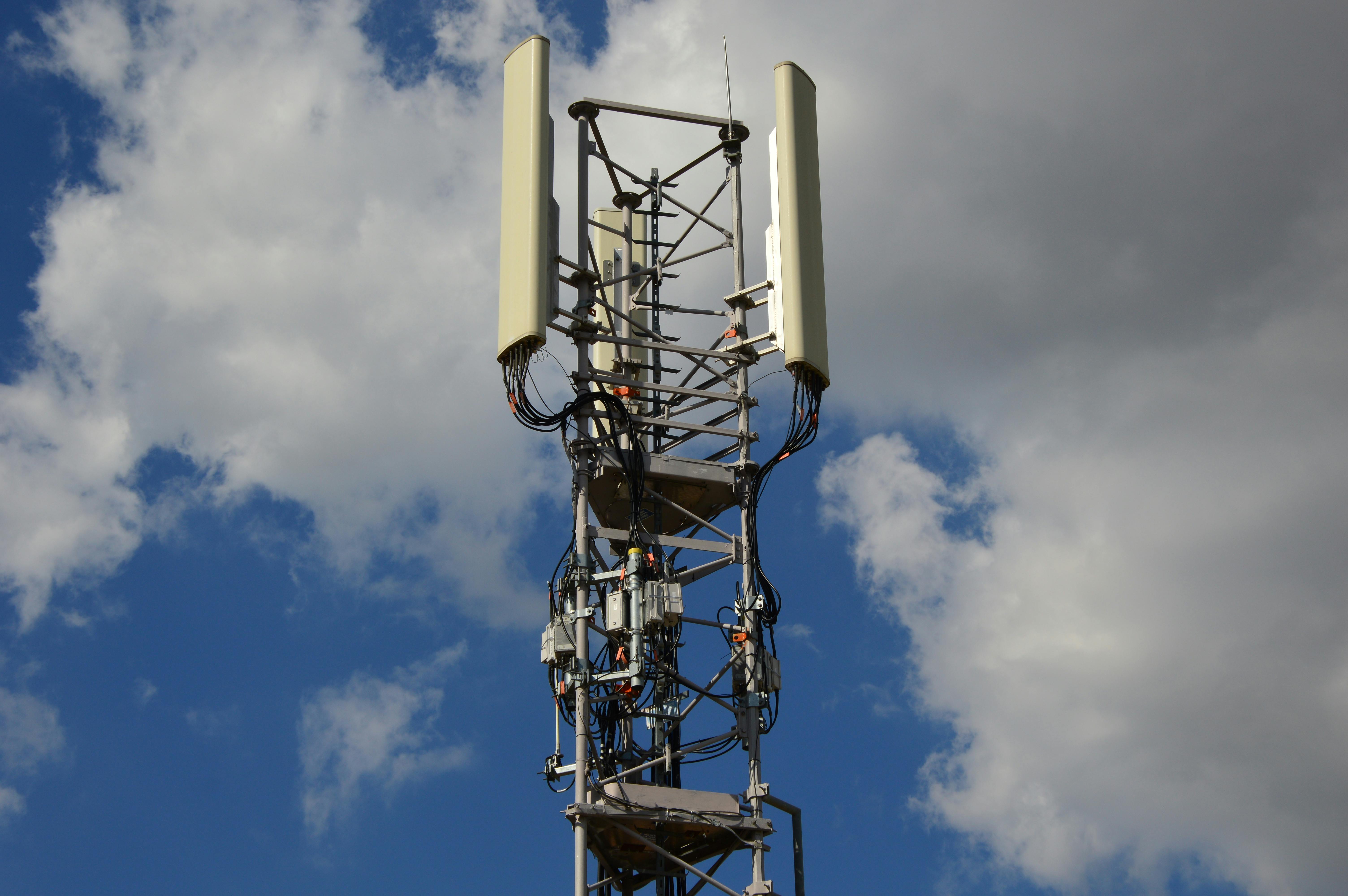
Antenna siting, sectorization and MIMO strategies were matched to topography, rail tracks, pipe bridges, tank farms, and to building materials that cause multipath and absorption. Continuous testing verified latency and throughput under realistic load mixes (video + telemetry + control).
Slicing strategy.
Slices were defined for (a) safety-critical systems, (b) robotics/AGVs, (c) video & AR maintenance, and (d) enterprise/IT traffic, with resource isolation and QoS enforcement. The GSMA’s slicing templates and 3GPP references provided a common language for requirements and assurance.
TSN bridge design.
5G was integrated as a TSN bridge, synchronizing time domains and scheduling, so mobile endpoints could join deterministic control domains without violating safety or quality constraints. 5G-ACIA and 3GPP materials outline the reference patterns used.
Exposure & observability.
A role-based dashboard summarized a broad KPI set, but the key was standards-aligned exposure: events, QoS states and policy hooks surfaced via the NEF so OT systems could consume them directly.
Cybersecurity & compliance.
Controls mapped to recognized guidance for 5G and slicing security, identity, micro-segmentation, continuous monitoring, and incident readiness, across 500+ checkpoints. EU and US agencies describe risk considerations specific to slicing and multi-tenant architectures; those informed both design and operations.
Lessons for any industrial site starting from zero
Co-design with OT and safety. Determinism is a system property, not a radio setting, bring controls engineers, safety officers and maintenance into the design room from day one. 5G/TSN integration is the linchpin.
Design for defense-in-depth. Treat slices as risk boundaries; verify identity, least privilege and monitoring at each boundary; plan for incident containment.
Instrument what matters. Expose network state to OT via standard APIs (NEF) so alarms and procedures are data-driven and automated.
Industrialize high-value use cases first. Drones for inspections, AGVs for logistics, AR for maintenance, these are proven in ports and large industrial campuses and translate well to process plants.
Plan the device roadmap. ATEX/IECEx-certified 5G endpoints for Zone 1/21 and 2/22 are expanding quickly, lock down models, lifecycle, and accessories early to avoid surprises.
What’s next: edge, roaming, and the runway to 6G
Edge + AI.
As more analytics run at the edge, private 5G becomes a fabric for real-time insight: high-rate video inspection, acoustic anomaly detection, and closed-loop control. 5G-ACIA frames architectures and deployment patterns that keep latency tight and data sovereign.
Seamless mobility across sites.
Standards and operator practices around PNI-NPN and enterprise policy control are maturing, enabling campus devices to move between private and public domains without losing identity, policy or observability.
6G: connecting intelligence, not just devices.
The ITU’s IMT-2030 framework establishes the global vision for 6G toward the 2030 horizon, highlighting integrated sensing, AI-native networking, extreme reliability and energy efficiency. Europe’s Hexa-X/Hexa-X-II programs are translating that vision into blueprints and early proofs, including joint communication-and-sensing and AI embedded into the network fabric. For heavy industry, this points to real-time digital twins of entire facilities, advanced XR for remote operations, and sub-millisecond control loops that expand what can be automated safely.
Practical takeaway: organizations that standardize on exposure APIs, adopt TSN-aware 5G, and invest in edge data pipelines today will be positioned to absorb 6G capabilities with minimal rework later.
 Willy Duric and Kenneth Van Cleynenbreugel ©PSG
The PSG difference: technology & science, translated into outcomes
The Pauwels Solution Group (PSG) lives at the intersection of technology & science. Private 5G is a quintessential PSG-style challenge: radio engineering and standards on one side; process control, safety, quality and change management on the other. What customers value is not just the network, it’s the outcome. Here is how Pauwels Consulting and SMEs like Willy Duric make that happen:
Bridging OT and IT. Consultants who understand PLCs, TSN and plant safety as well as 5G and APIs ensure the design performs in the plant, not just in a lab.
Hardening systems, not only networks. Security work scopes include slice boundaries, identity, monitoring and incident drills, aligned with recognized slicing security guidance.
Industrializing credible use cases. Teams bring proven patterns, drones, AGVs, AR maintenance, validated in ports and large campuses, then adapt them to chemical constraints and ATEX zones.
Designing for tomorrow. Standards-aligned exposure, TSN integration and edge architectures make today’s private 5G 6G-ready, mapping cleanly to IMT-2030 and Hexa-X directions like integrated sensing and AI-native networking.
From a truly blank page to a resilient, observable and secure private 5G platform, this program shows what disciplined engineering can deliver for complex process environments. With Pauwels Consulting and PSG’s ecosystem of experts, chemical and industrial operators can digitize safely, scale confidently, and stay ready for the next wave of innovation.
)