

)
From vibes to vacuum: what vibe coding can, and can’t, learn from Voyager 1
In 2025, software development is undergoing a seismic shift. The emergence of "vibe coding", a term popularized by OpenAI cofounder Andrej Karpathy, has redefined how developers interact with code. Instead of meticulously crafting each line, developers now describe their intentions in natural language, allowing AI to generate the corresponding code. This approach has democratized coding, enabling even those without formal programming backgrounds to create functional software.
The Rise of Vibe Coding
Vibe coding represents a paradigm shift in software development. By leveraging large language models (LLMs), developers can now focus on high-level problem-solving while AI handles the intricacies of code generation. Deepak Singh, Vice President at Amazon Web Services, likens this to having a "true pair programmer" that collaborates with you in building software.
This method has proven especially effective for rapid prototyping. For instance, at the National Australia Bank, half of the production code is reportedly generated by Amazon's Q Developer AI assistant . Such efficiency gains have caught the attention of venture capitalists, who are now more inclined to invest in founders with strong domain expertise and the ability to effectively leverage AI, rather than traditional coding skills .
Limitations and Challenges
Despite its advantages, vibe coding is not without its challenges. One significant concern is the potential for developers to use AI-generated code without fully understanding its functionality, leading to undetected bugs or security vulnerabilities. Andrej Karpathy himself acknowledges that AI tools are not always capable of correcting or understanding bugs, which can result in developers experimenting with unrelated changes until issues are resolved.
Moreover, while vibe coding is excellent for "weekend projects," its suitability for critical systems requiring high reliability and maintainability is questionable. The lack of deep understanding of the generated code can pose risks in professional environments where thorough debugging and long-term maintenance are essential.
A Glimpse into the Past: Voyager 1
To appreciate the contrast, let's journey back to 1977, when NASA launched Voyager 1, a spacecraft designed to study the outer planets. Remarkably, Voyager 1 is still operational today, over 15 billion miles from Earth. It runs on just 69.63 kilobytes of memory and uses an 8-track tape recorder for data storage . The software controlling Voyager 1 was written in FORTRAN, a language that, while archaic by today's standards, has proven its durability.
The success of Voyager 1 can be attributed to several factors:
Rugged, Radiation-Hardened Parts: The spacecraft was built to withstand the harsh conditions of space.
Simple, Reliable Design: The straightforward architecture minimized potential points of failure.
Backup Systems: Redundancies ensured that if one system failed, another could take over.
Meticulous Engineering: Engineers of the era had to account for every byte of memory and every line of code, given the limited resources.
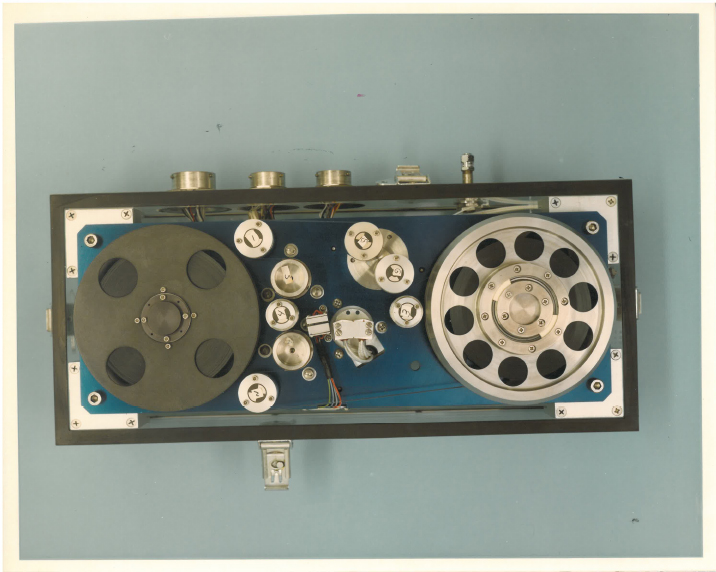 Voyager's 8-track digital tape recorder. Image Credit: NASA/JPL-Caltech
What If Voyager 1 Had Used Vibe Coding?
It’s tempting to imagine a world where Voyager 1, the most distant human-made object, was built using the laissez-faire, intuition-led principles of vibe coding. Picture this: a developer, in 1976, sitting in a lab at NASA’s Jet Propulsion Laboratory, typing prompts like:
“Create code that keeps the spacecraft stable during its flyby of Jupiter.”
Or…
“Write a communication protocol for deep space transmission, optimized for minimal stress.”
The absurdity writes itself. A mission that took years of planning, testing, and validation simply couldn’t have been left to intuition, no matter how brilliant the minds involved. In deep space, there's no undo button, no hotfix update, no Slack channel to report a bug. One misfire, literally or metaphorically, and the spacecraft would have become a $250 million piece of floating debris ($1.27 billion in 2025, adjusted for inflation).
But let’s bring that thought experiment closer to home.
Imagine: The Power Grid, Vibe-Coded
Let’s say you’re working at a national electricity provider, and you're designing the load-balancing system that keeps the power grid stable. This is the code that tells substations when to offload or absorb electricity, especially during peaks, like when everyone in the country turns on their coffee machine at 7:00 AM. Traditionally, this requires deep systems knowledge, real-time sensor data integration, and tight tolerances.
Now enter vibe coding.
Your prompt might look like:
“Generate code that balances electricity across regions intuitively. Should avoid blackouts and feel responsive.”
The AI obliges. The code looks elegant. It passes basic simulations. But on a hot August day, when everyone cranks their air conditioning, your code fails to reroute load fast enough. Cities dim. Hospital systems rely on backup power. Data centers switch to diesel generators. All because the AI missed the nuance in how inductive loads respond in milliseconds.
No vibe could have seen that coming.
Healthcare: When Vibes Aren’t Enough
Or take healthcare. Imagine you're coding a scheduling system for a hospital. This isn't just about assigning beds or avoiding double bookings. It involves handling critical paths for surgery rooms, ensuring the right specialists are on-site, and coordinating patient transport and medication timing.
Using vibe coding, the prompt might be:
“Build a hospital scheduling system that optimizes flow and patient happiness.”
Sounds great, until a cancer patient’s chemotherapy is delayed because the AI didn’t account for a treatment cooldown period, or a surgical team is scheduled for two overlapping procedures because “flow” wasn’t rigorously defined.
Even worse, if no one on the team understands how the AI derived its logic, debugging becomes a wild goose chase with potentially fatal consequences.
The Core Difference: Stakes and Consequences
In vibe coding, especially in its current form, the cognitive load shifts from “writing code” to “describing what you want.” That’s incredibly powerful in creative fields, early-stage prototyping, and internal tools. But when we’re talking about edge cases, lives on the line, or systems operating at planetary or interplanetary scale, the bar is different.
Voyager 1’s engineers didn’t vibe their way into a 50-year legacy. They anticipated failures, wrote code that could be patched using magnetic pulses sent from Earth, and embedded redundancy into every subsystem. They knew their code would be running long after they'd retired, perhaps even long after they were gone.
A Modern Middle Ground
This isn’t to say that modern AI tools have no place in critical systems. On the contrary, LLMs are already helping engineers write test cases, document codebases, and spot vulnerabilities. But here’s the key: in high-stakes contexts, they augment human oversight. The best engineers use AI like a precision tool, not a magic wand.
And yet, even the debugging process, one of the most critical steps in software engineering, remains a major blind spot for AI. Microsoft Research recently highlighted this in their “Debug-Gym” project, a benchmark suite designed to measure how well AI models can identify and fix bugs. The findings were sobering: current models often fail to trace errors logically, relying instead on pattern-matching rather than understanding causality. In other words, AI still doesn’t “think” like a human when it comes to debugging, at least not yet.
And maybe that’s the lesson. The future of software, whether for deep space, digital health, or national infrastructure, isn’t about throwing out rigor in favor of vibes. It’s about knowing when to lean into speed and creativity, and when to double down on precision, redundancy, and understanding.
Conclusion: Beyond the Vibes
Vibe coding is an exciting leap forward in how we interact with machines. It lowers the barrier to entry, empowers solo builders, and speeds up ideation in ways the Voyager engineers could only dream of. But if the dream is to build things that last, not just go viral, we need to respect the boundary between playful exploration and serious engineering.
If you want to build the next MVP, vibe coding might get you there before the weekend’s out.
But if you want to build something that still works when your grandchildren are in charge? Write like it’s 1977. Debug like you’re in deep space. And save the vibes for the UI animations.
Need help separating the vibes from what truly lasts?
At PSG, our digital companies specialize in helping you assess exactly where and how AI can make a real difference, today, and in 50 years. Whether you're exploring AI-assisted development, building scalable software architectures, or wondering where human oversight should remain critical, we’re here to guide your strategy with depth, realism, and long-term thinking.
)